Loading Short Yoga Lessons…

How It Works

You don’t have to be a doctor to understand the science behind yoga

The nervous system, muscle structure, how the body responds to movement… Understanding these topics often means searching through scattered resources, decoding specialist language, and working out how it all relates to yoga. Even when you find the research, it isn’t always clear how to apply it to your own practice.

Yoga Intelligence brings together research and trusted teaching resources, using audio in a language you know to explain how yoga affects the body and the research behind it. Like a teacher explaining things beside you, followed by guided practice that takes you from understanding to first-hand experience.
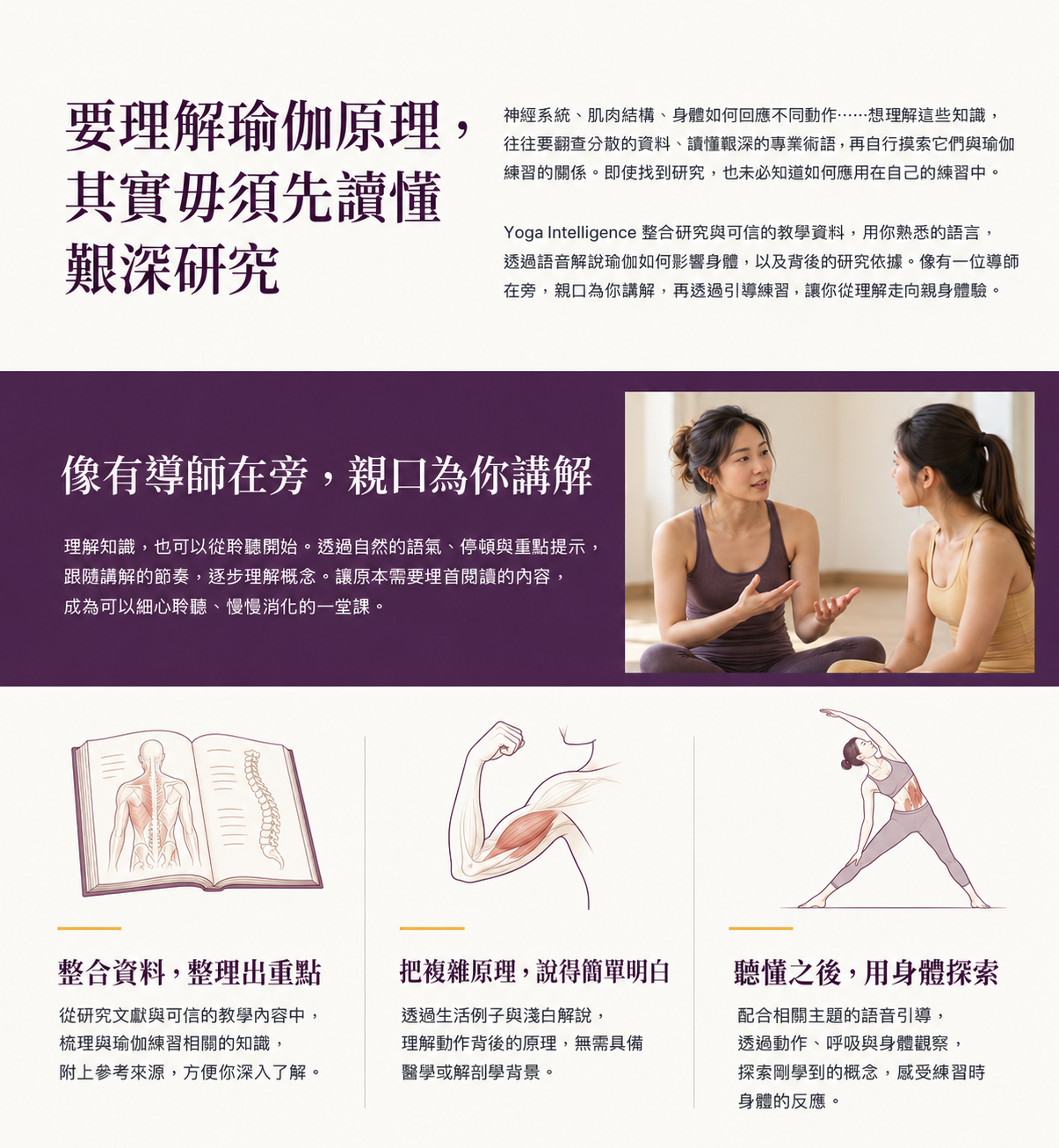
Like a teacher beside you, talking you through it

Understanding can begin with listening. Natural pacing, pauses, and emphasis help you follow the explanation and build your understanding, step by step. What once meant working through dense reading becomes a lesson you can listen to carefully and absorb at your own pace.

Grounded in research, with sources you can follow

Drawing on research literature and trusted teaching resources, we use AI to help organise the material and explain it clearly. References let you understand the key ideas and trace them back to their sources.

Complex ideas, explained simply

Everyday examples and plain-language explanations help you understand the principles behind movement, without needing a background in medicine or anatomy.

Understand, then experience it yourself

Related Audio Guidance invites you to explore what you have learned through movement, breathing, and body awareness, noticing how your body responds as you practise.

Our research approach

How we use research to create our content

How we use research

Yoga Intelligence uses AI to help turn yoga questions and relevant sources into accessible audio explanations. The aim is to support understanding of both the findings and their limitations.

Start with a focused question

Each episode explores a specific aspect of yoga practice, movement, breathing, philosophy or teaching.

Consider the evidence

Sources may include research papers, study registrations and specialist educational material. These provide different kinds of information; a proposed study should not be presented as a completed finding.

Explain findings in context

The people studied, the methods used and the study’s limitations affect how findings can be interpreted and applied.

Make the explanation accessible

We prepare English and Cantonese audio explanations, aiming to preserve the meaning and uncertainty of the source material.

Include practice where appropriate

Some topics include a separate guided practice track. Others are presented as explanation only.